Lewis Center at Harvard Law School
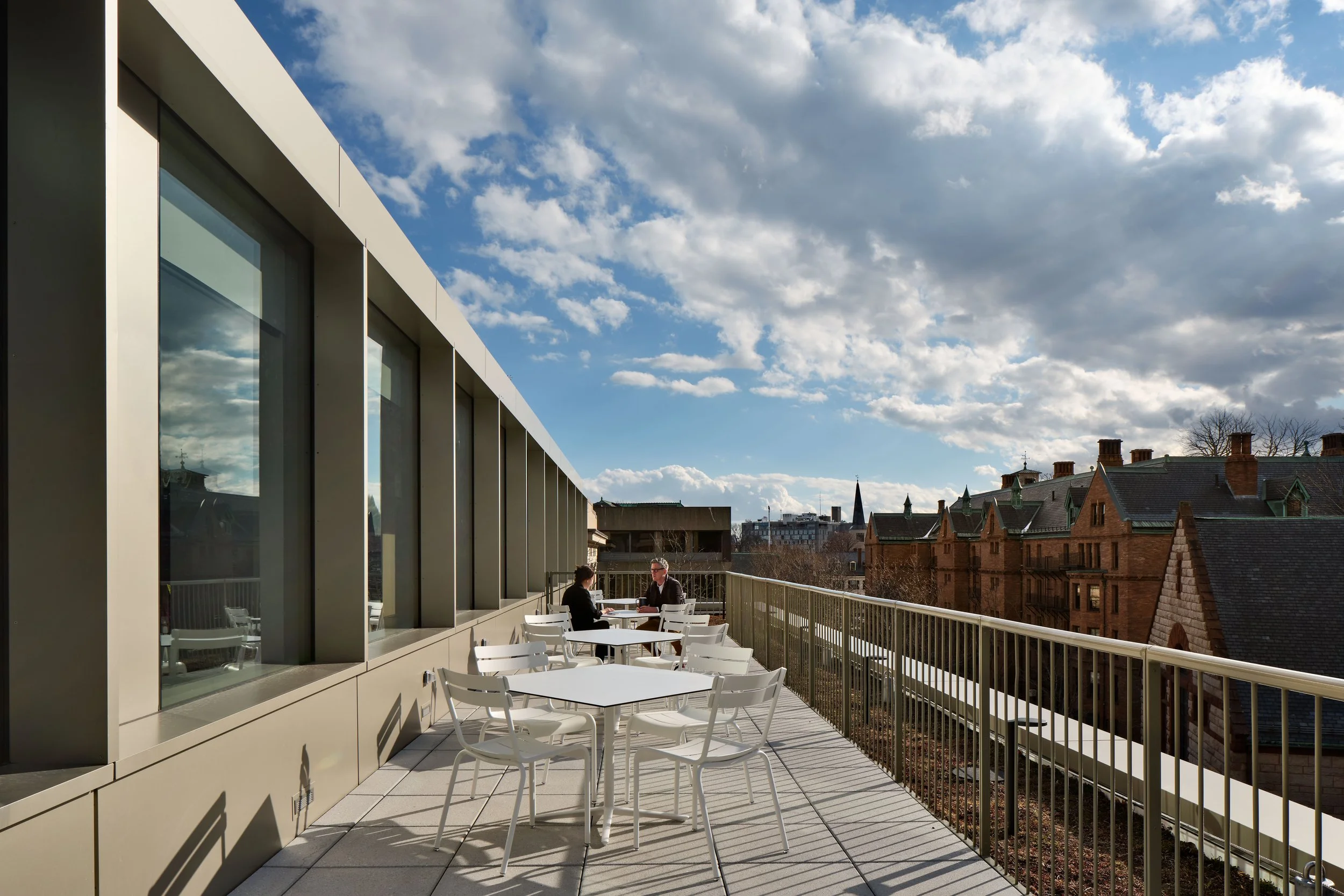
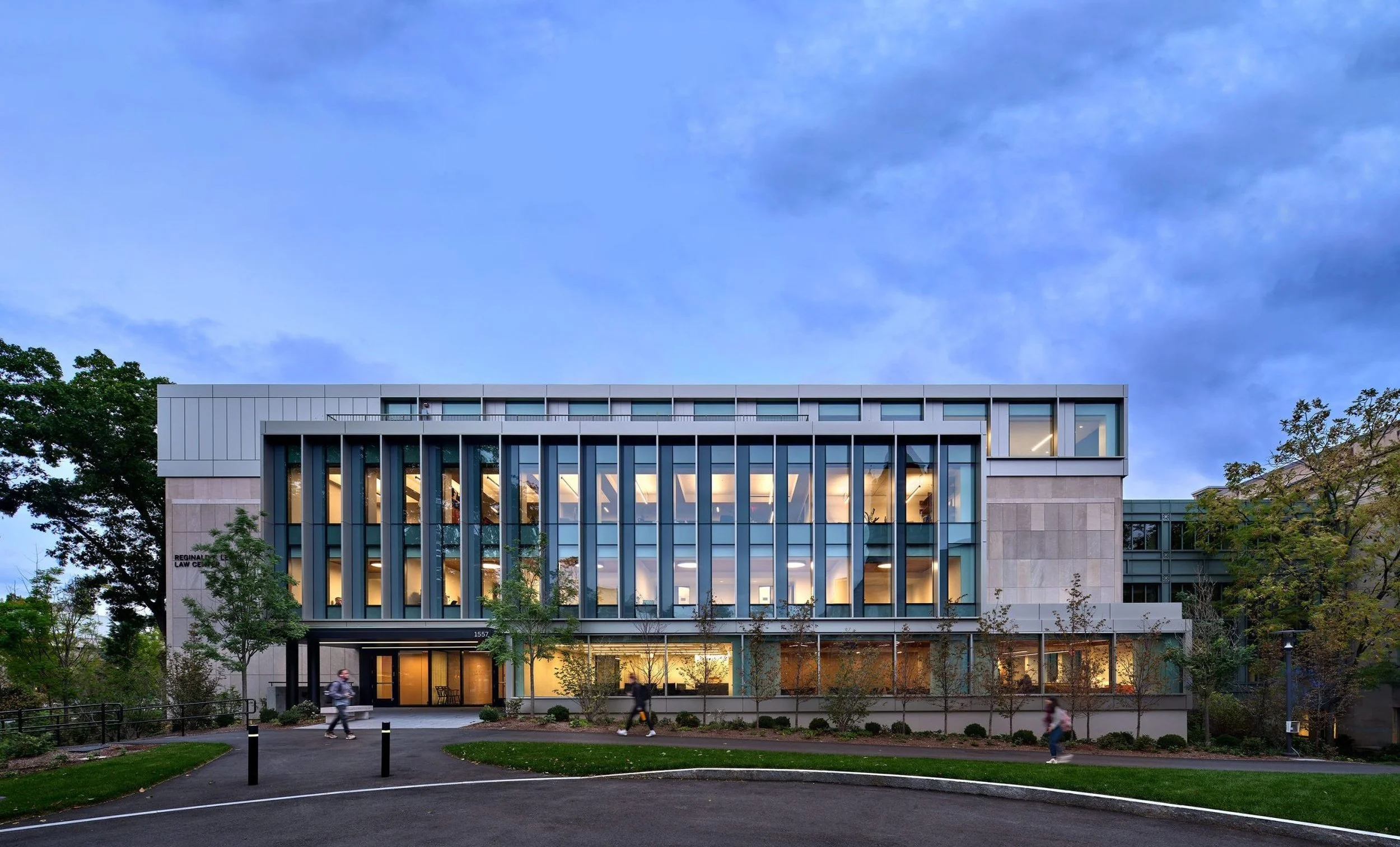
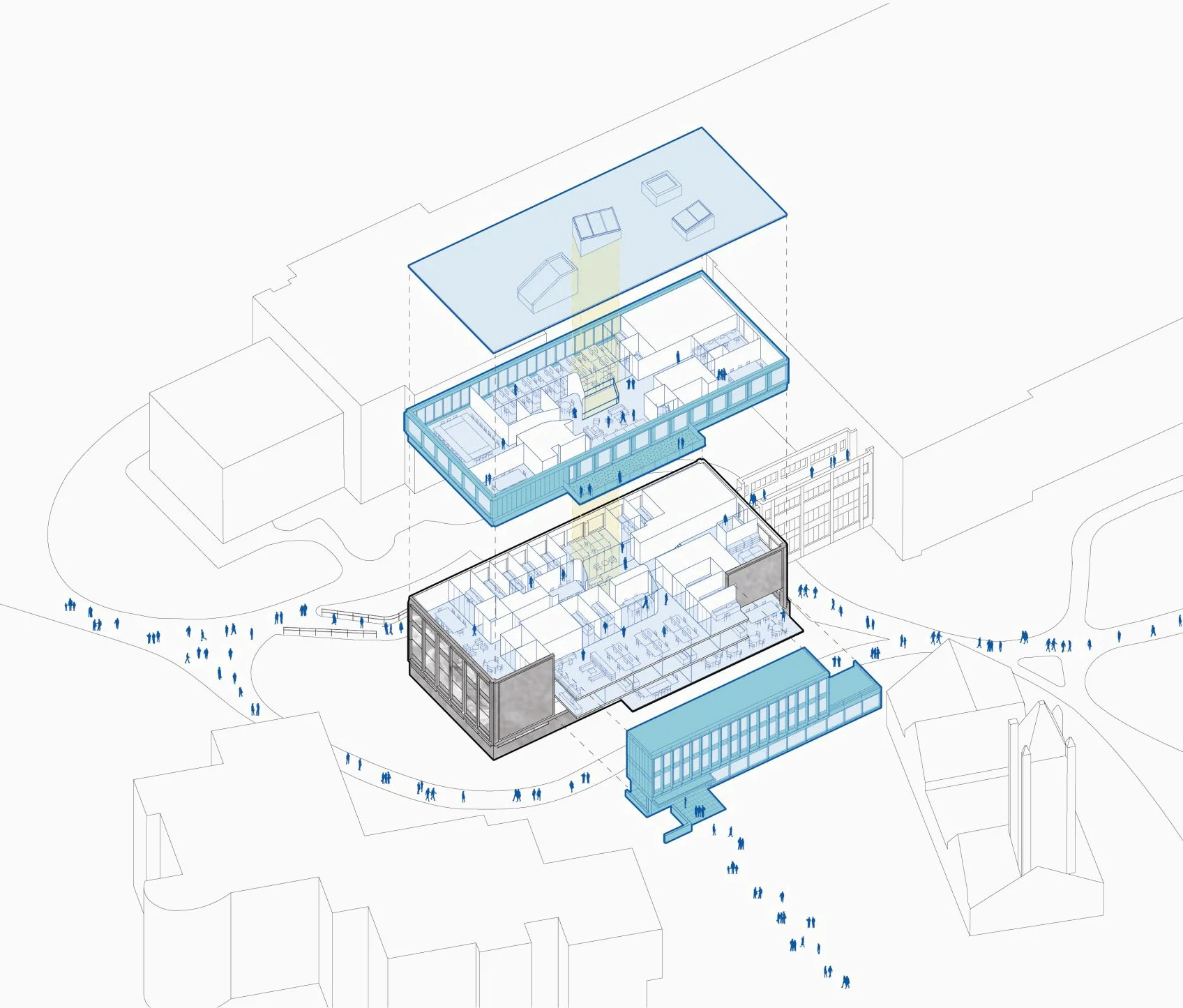
The Reginald F. Lewis Law Center at the Harvard Law School is a 21st century learning and work environment for students, faculty, staff, and law clinic clients. The project transformed a 1959 modernist building, originally designed by Shepley Bulfinch Richardson & Abbott as a library stacks building, with a new entrance, increased teaching and office space, a new circulation system, and high-performance glazing Zinc and glass additions complement the original limestone, metal, and glass building and create a tuned coherence between old and new. A new floor and roof terrace were added to the top of the building, and formerly opaque walls were opened up to bring natural light into the core of the building. The adaptive reuse of the existing building structure and enclosure resulted in a 40% reduction in embodied carbon emissions compared to a new construction building using standard industry materials. Overall, the adaptive reuse of the building saved about one million tons of embodied carbon, which is the equivalent to the annual energy use of 120,000 homes.
Role: Project Architect
Architect: Ten Berke
Location: Cambridge, MA
Date: 2021
SF: 50,000
Budget: 48MM$
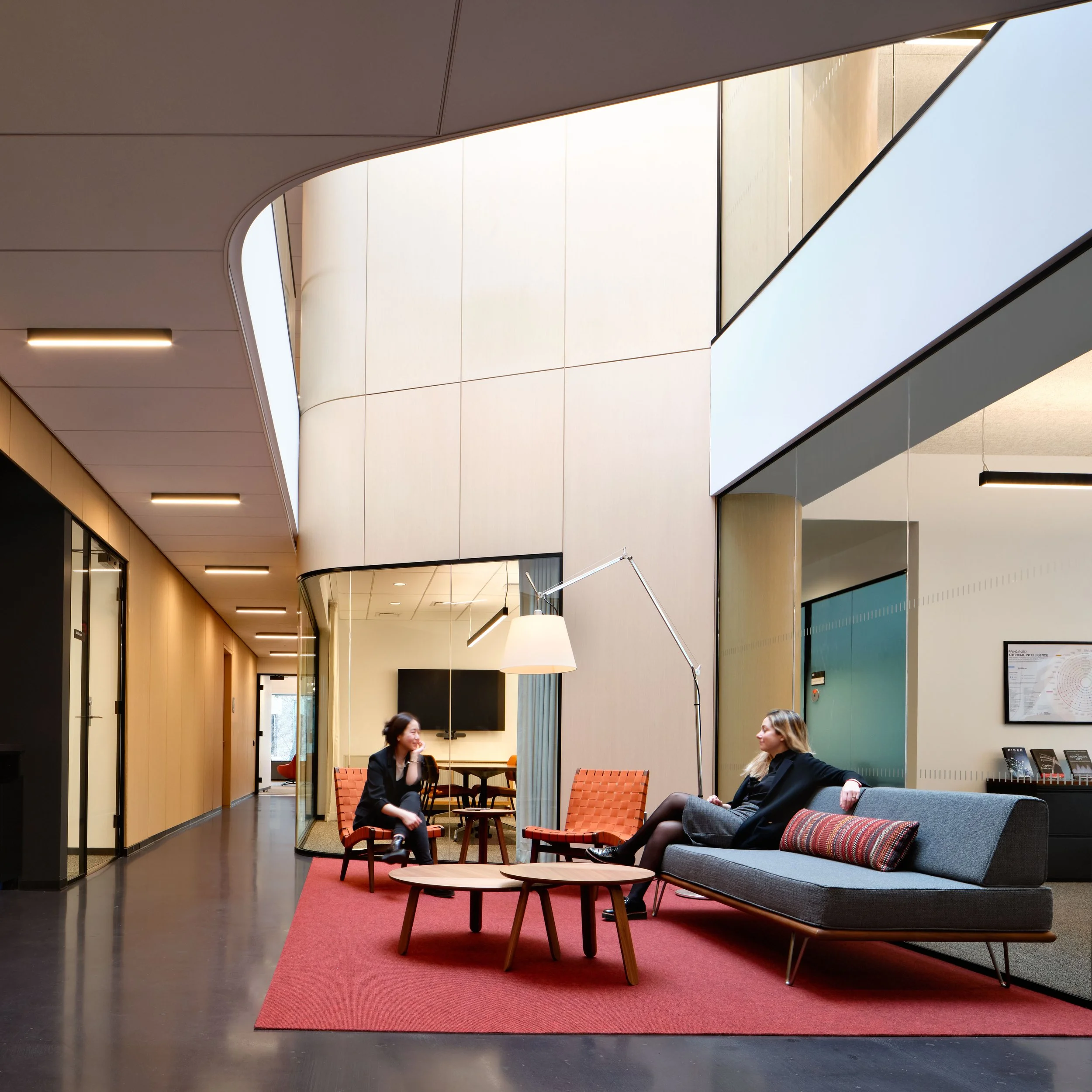
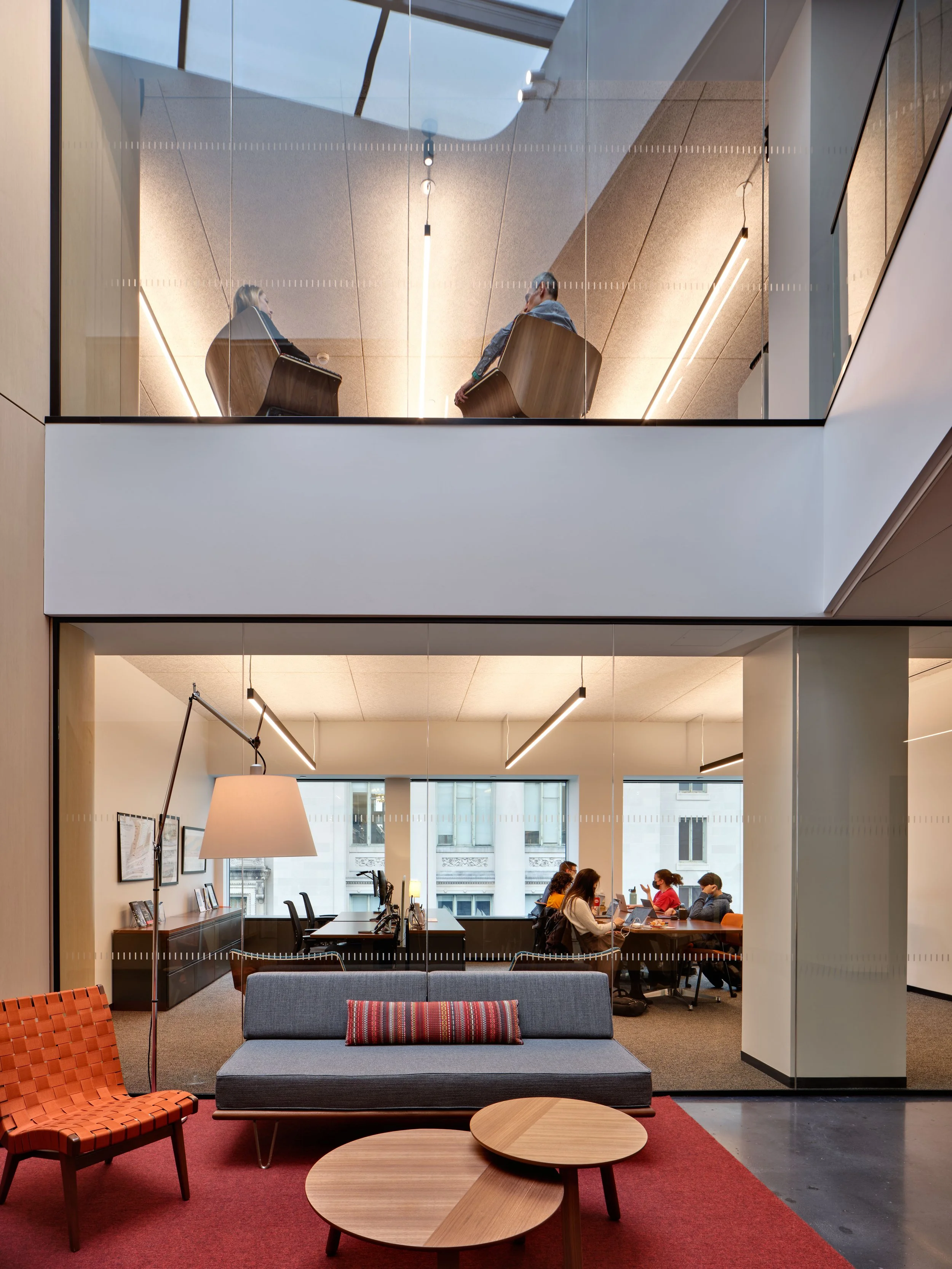
Inside, several sections of floor were removed to create interlocking spaces that foster collaboration, learning, and co-working. Flexible conference and meeting rooms and collaborative areas encourage interdisciplinary work.
The above ‘lightwell hub’ intervention required extensive and careful coordination with structure, glazing, and interior finishes in order to create a seamless transition between new and old. White oak volumes are a repeated motif throughout the building and tie the different programs together.
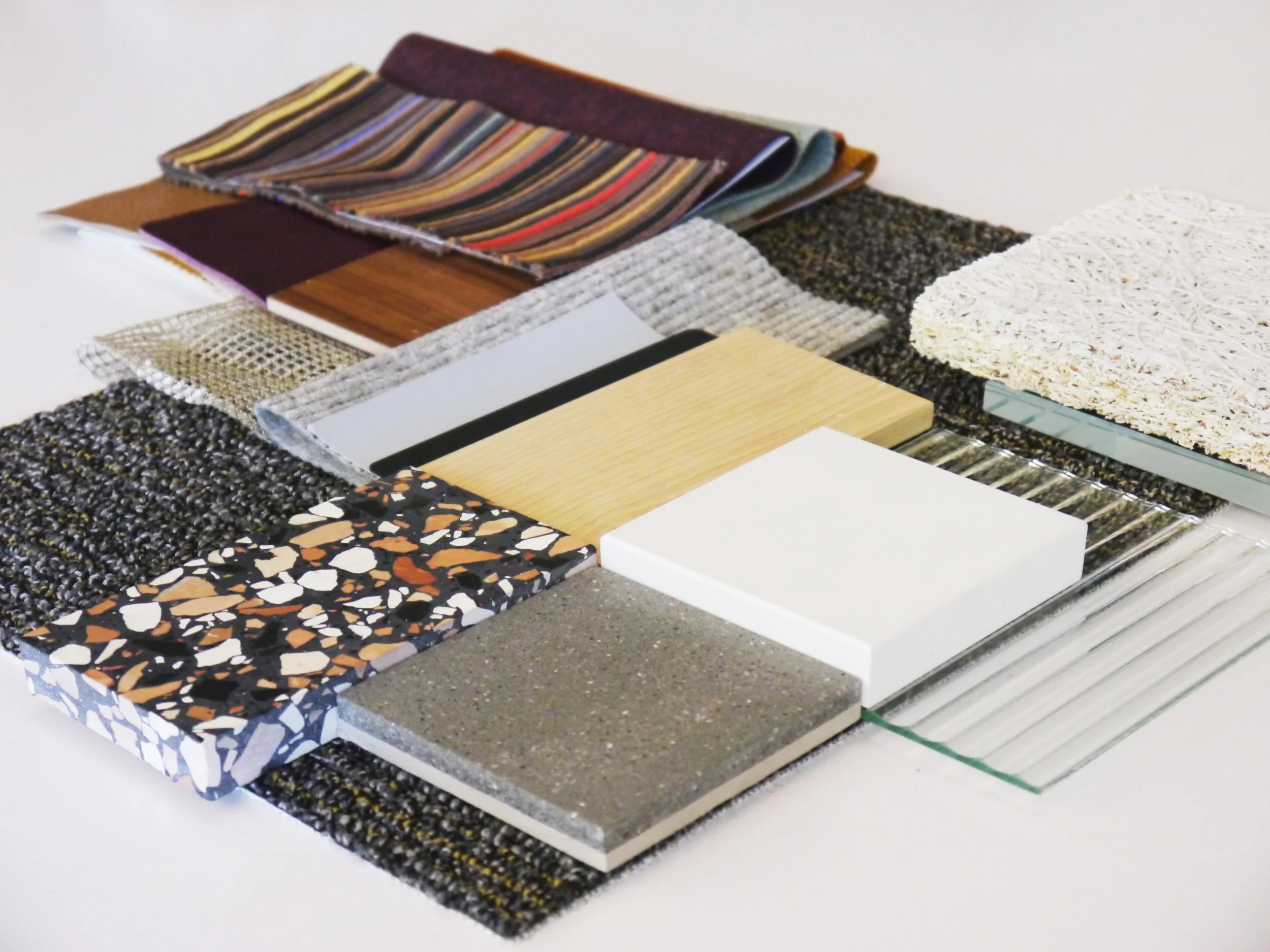
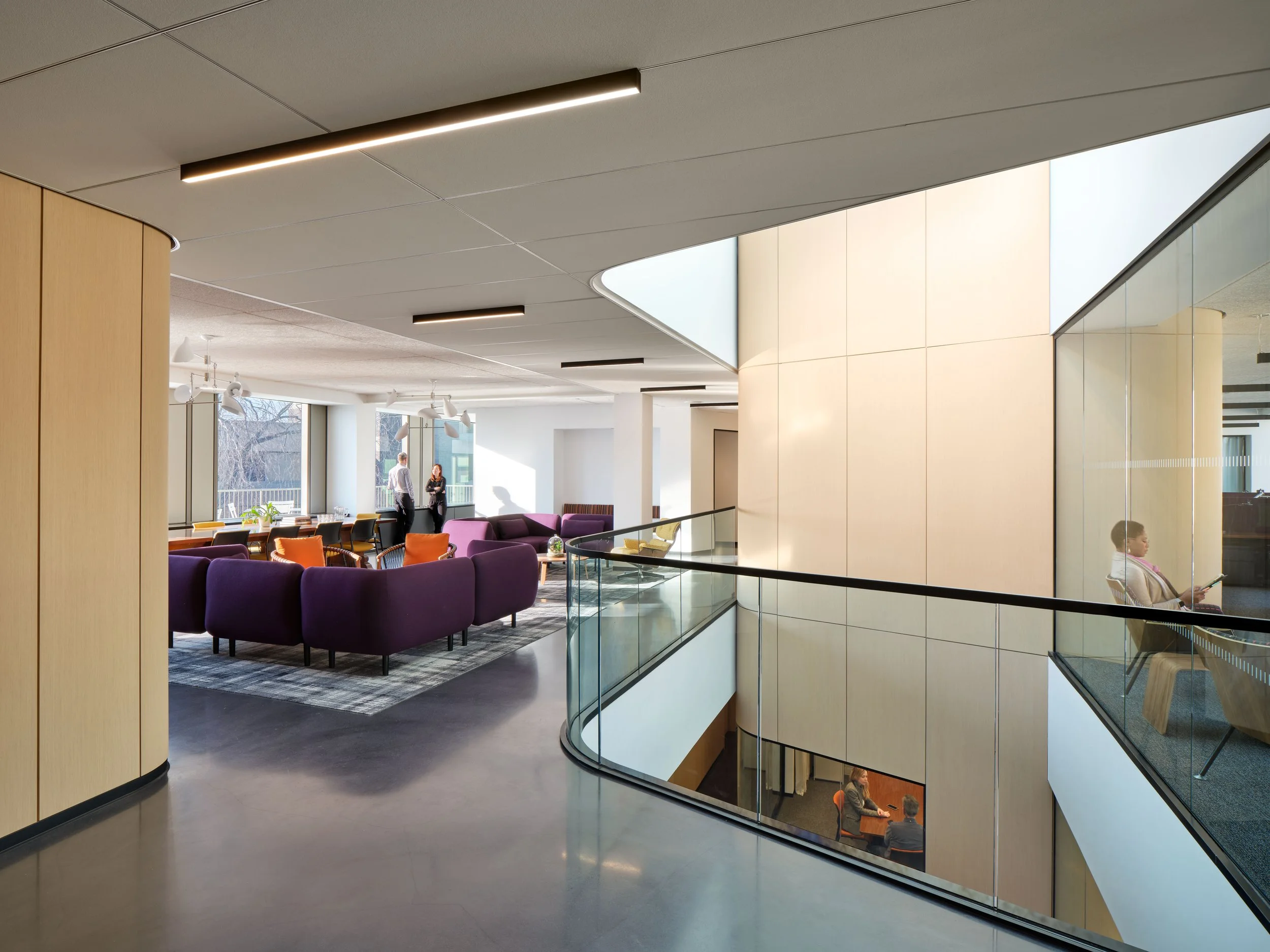
Bright colors, textures and patterns were utilized throughout the building as an ode to the mid-century history of the building. These design decisions enliven the spaces for students in deep study throughout the day and into the dark evening hours.
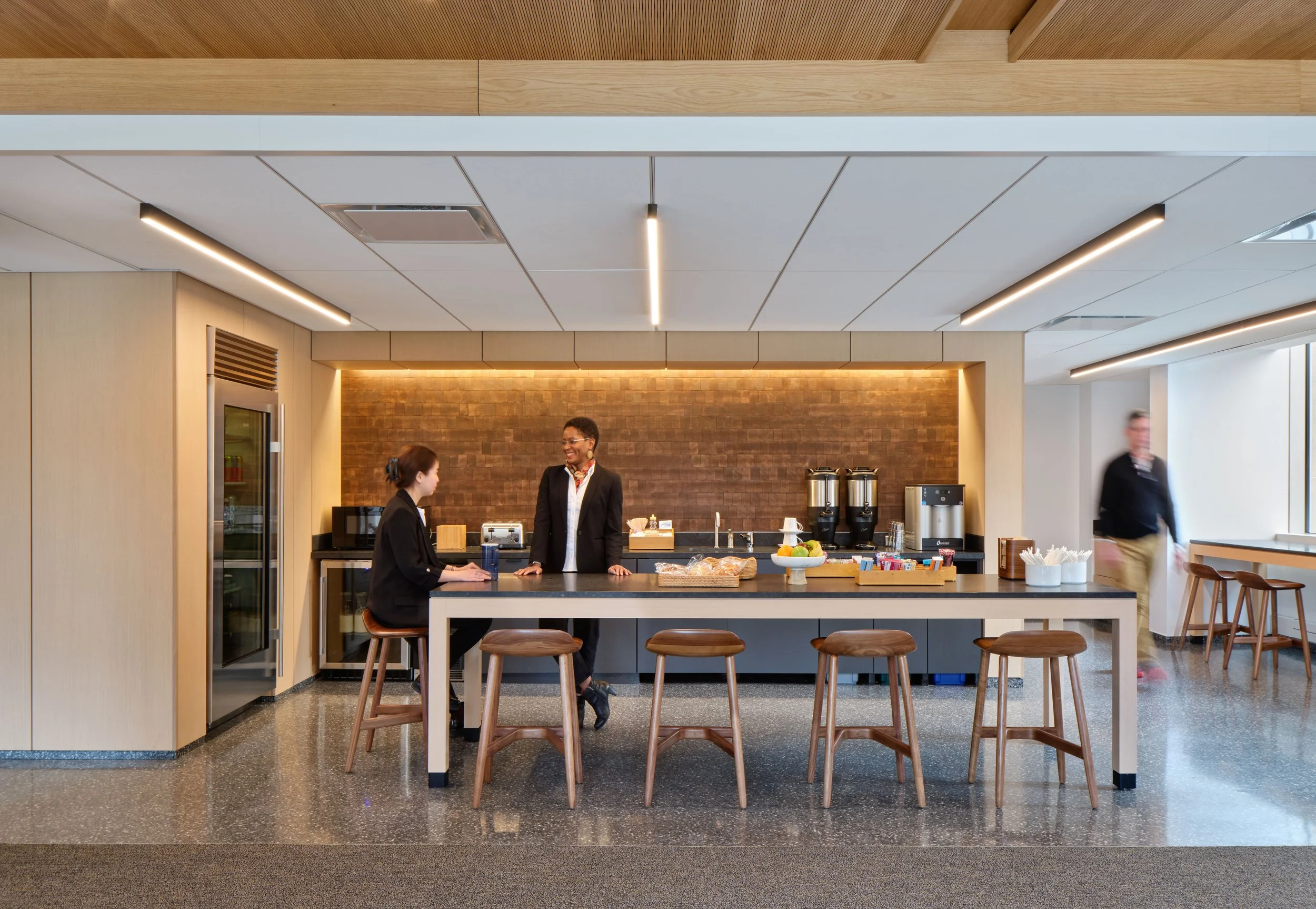
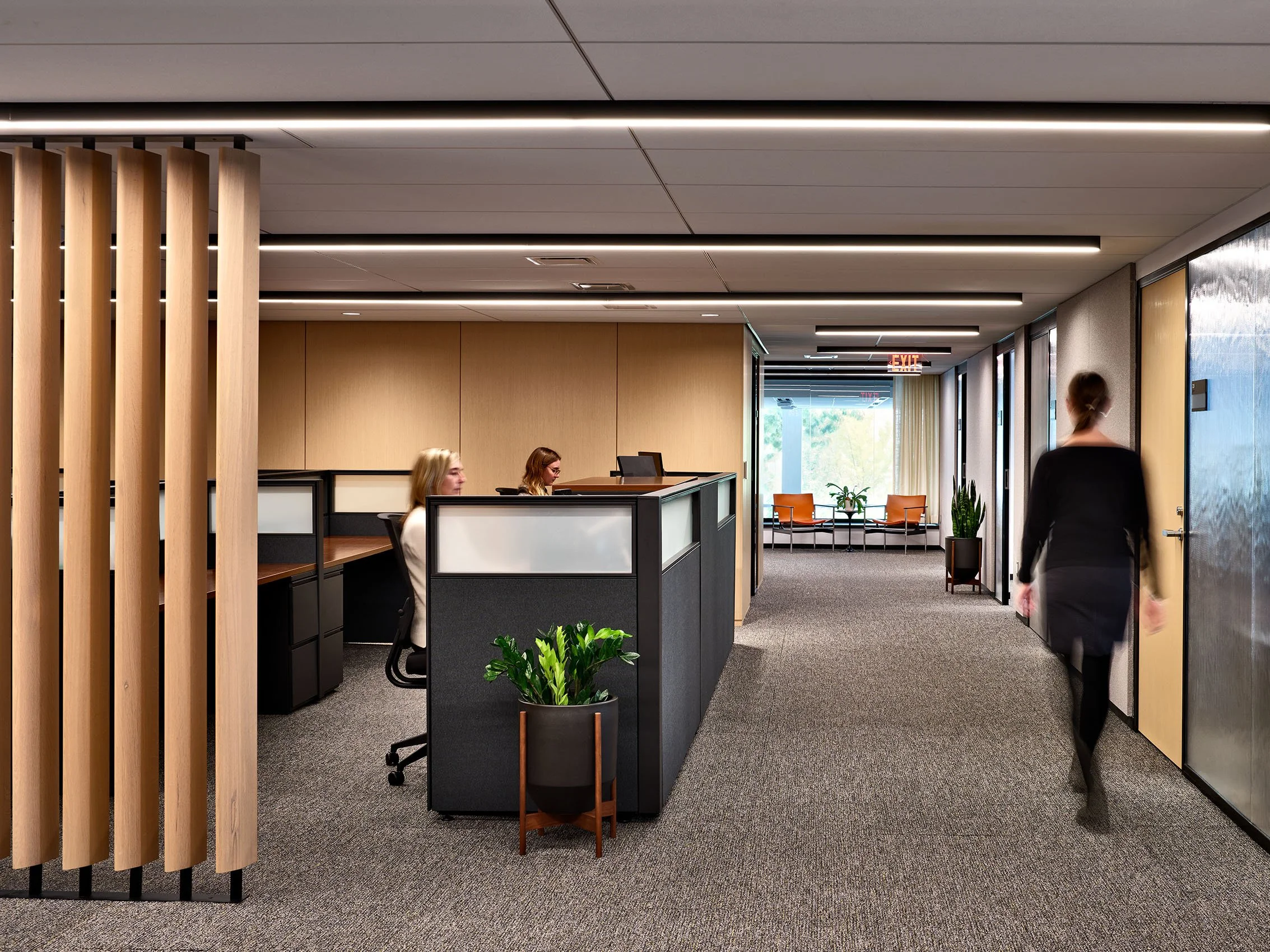
The faculty office floor (above) was designed with an administrative zone in the center of the floor plate. A white oak wooden screen provides visual privacy from the main entrance and private offices line the perimeter taking advantage of the large historic square windows. The private faculty offices were designed with direct inspiration from the lines, colors and textures of mid-century modern furniture.
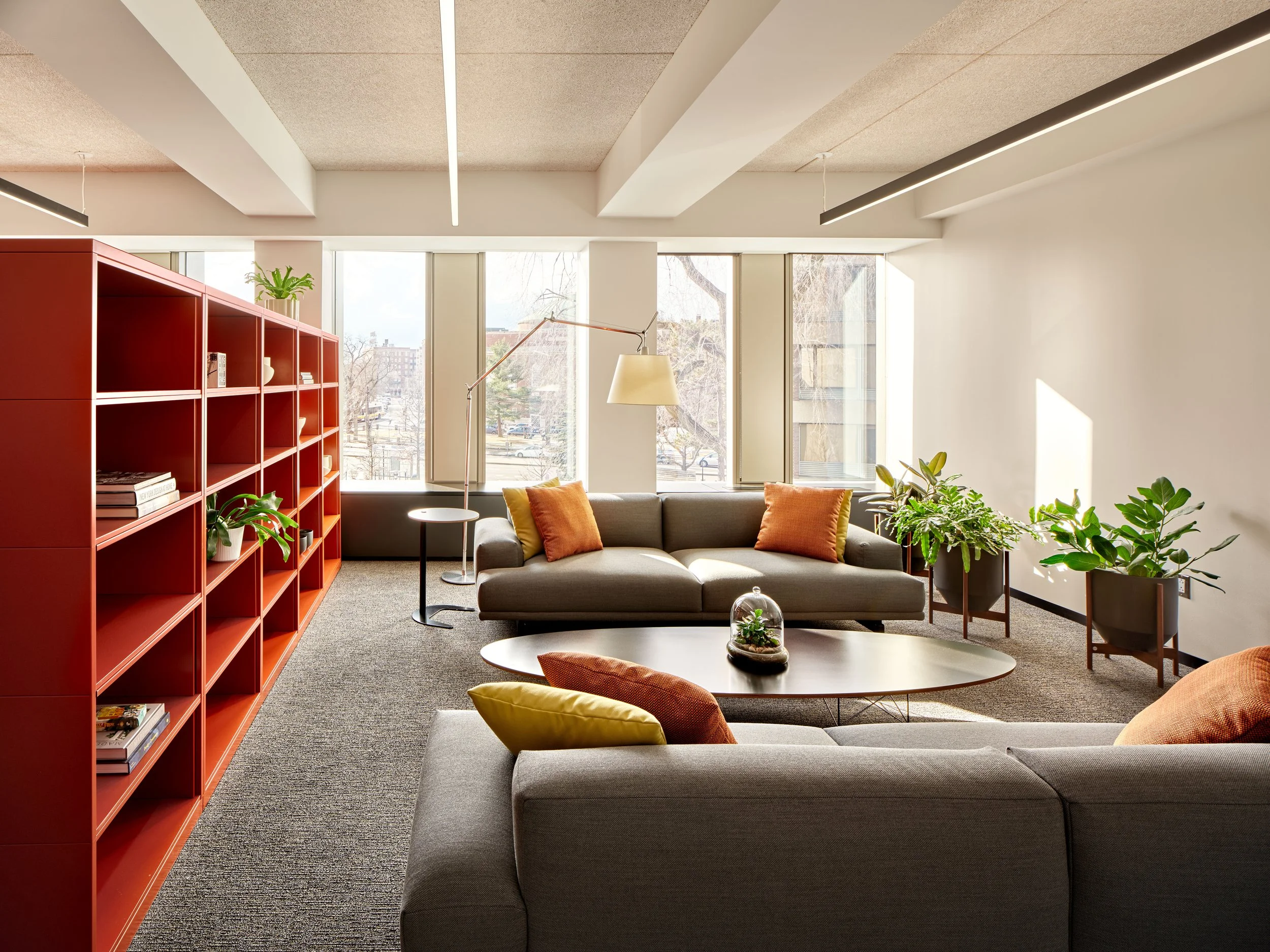
A wide range of seating types and work areas were provided to suit the varying modes of learning that students undertake. This constellation of spaces in the building supported private research to large group collaboration (image carousel below).
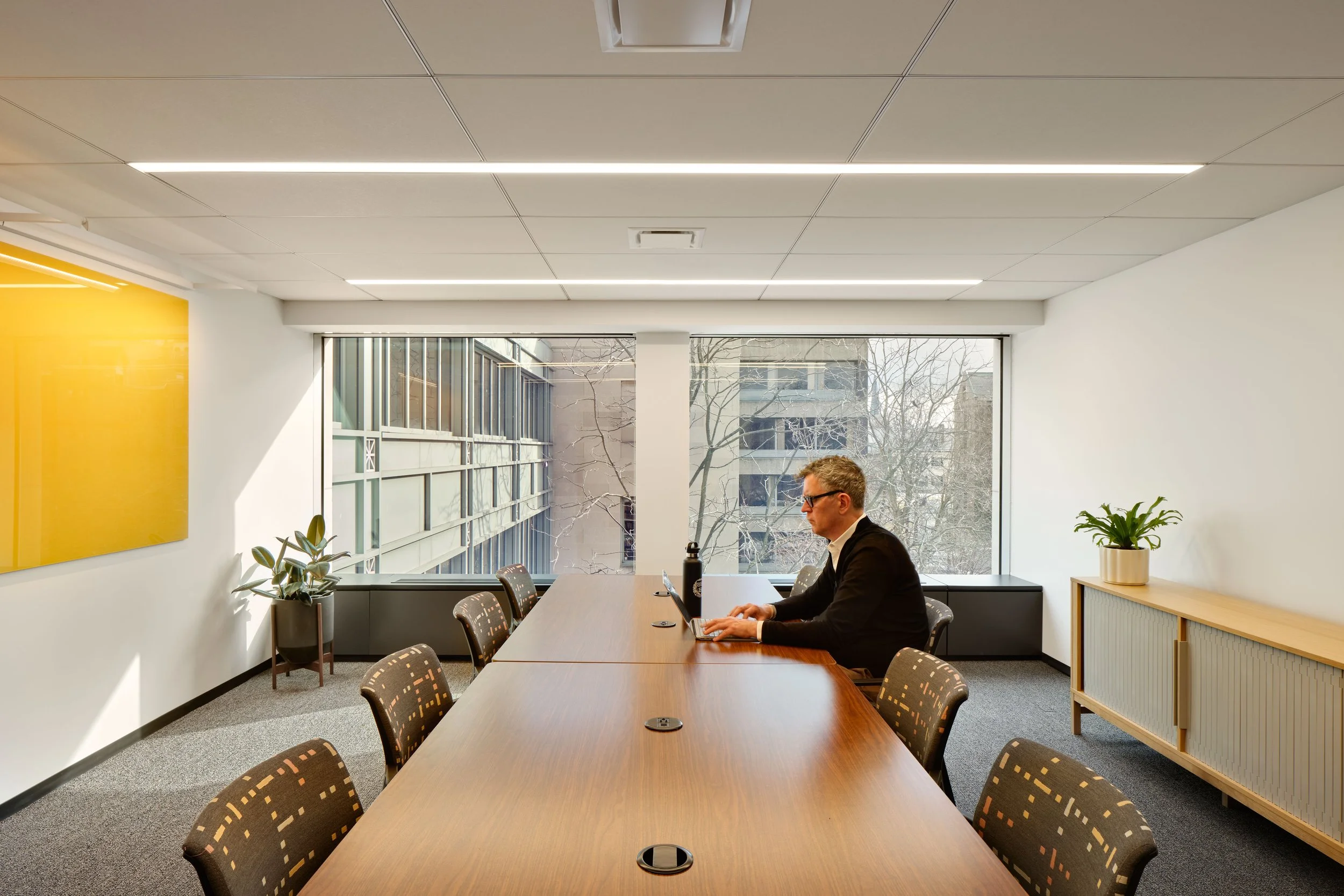
Seminar Room
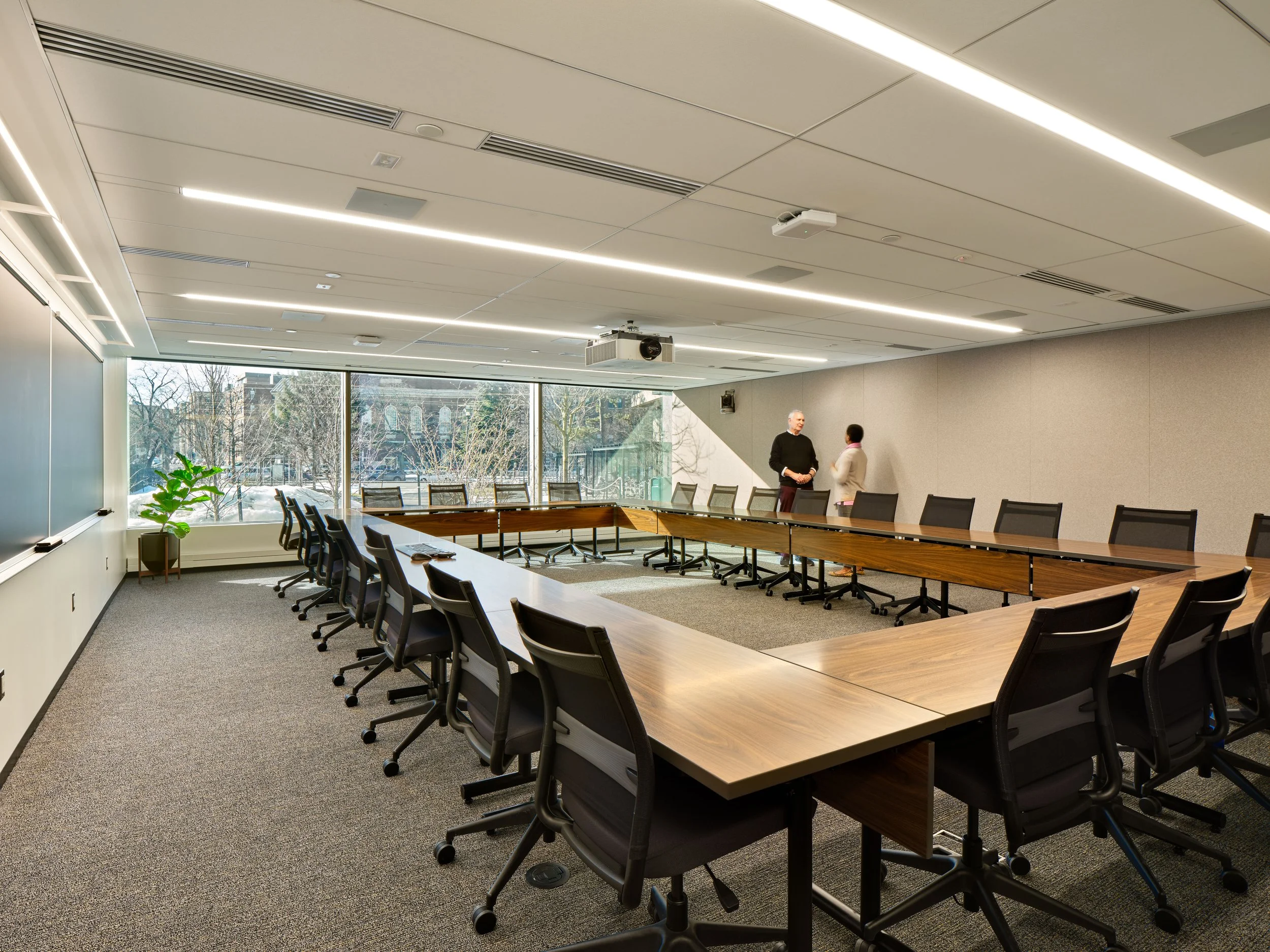
Large Seminar Room
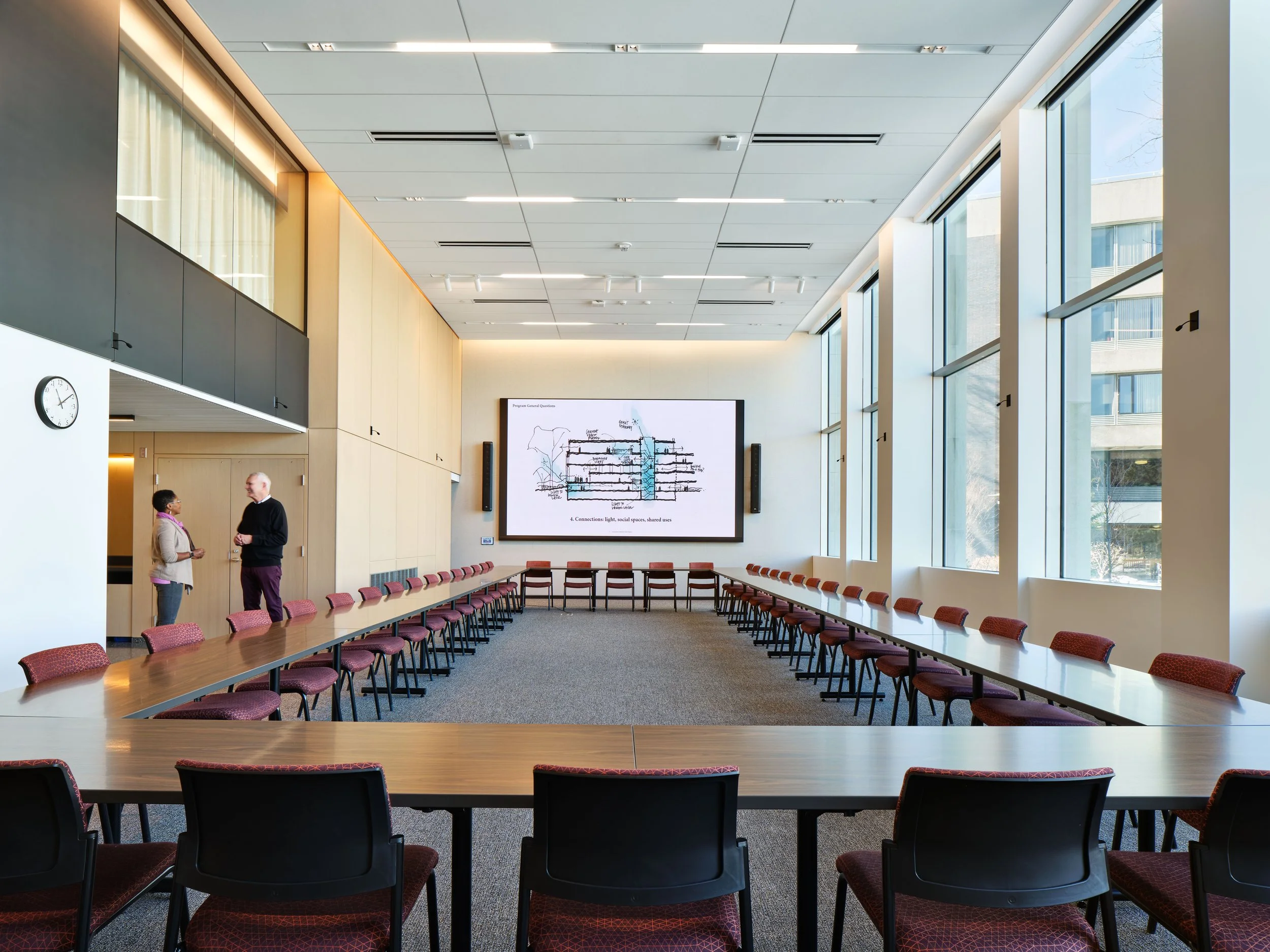
Multi-Purpose Room
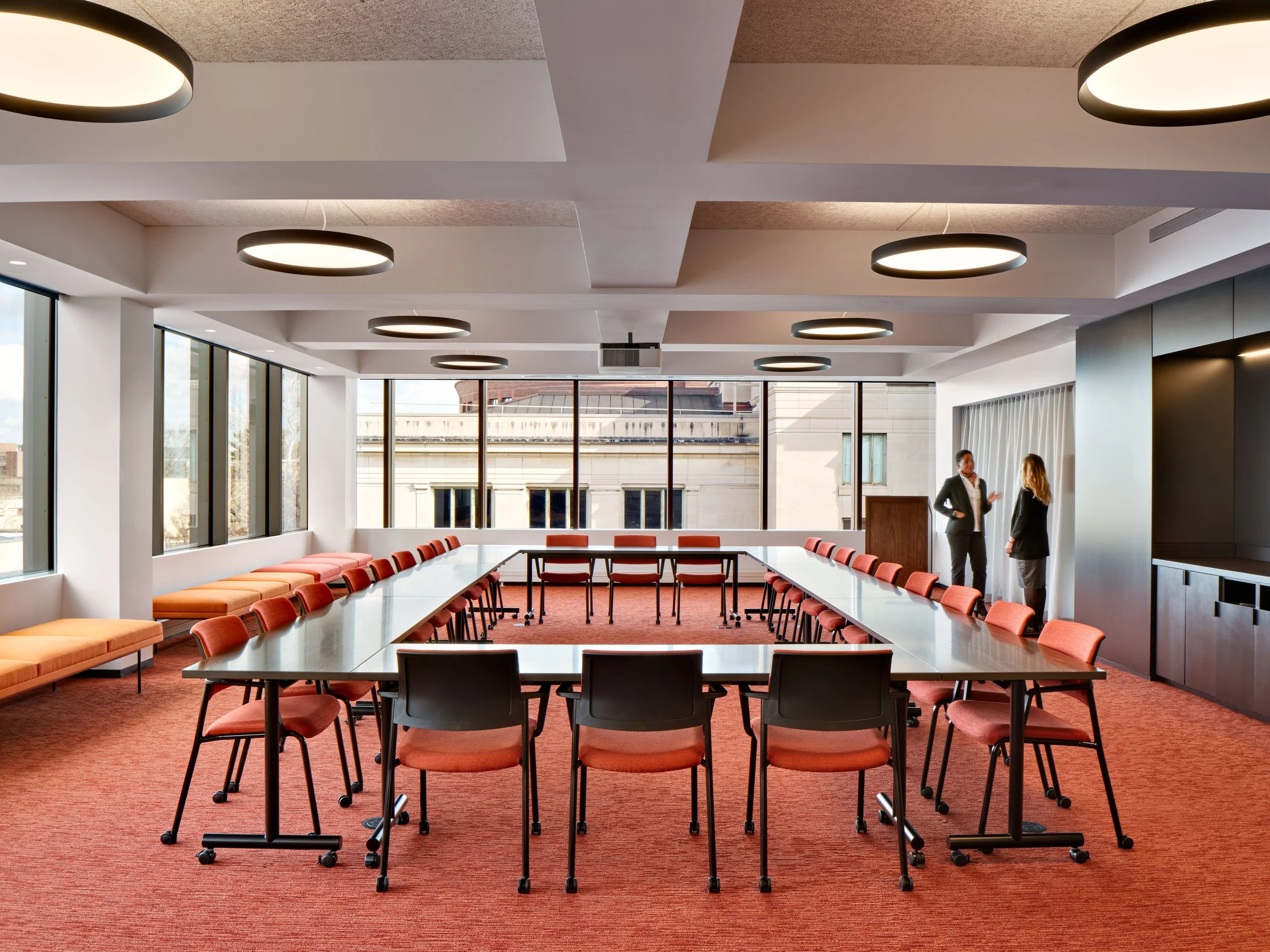
Multi-Purpose Room
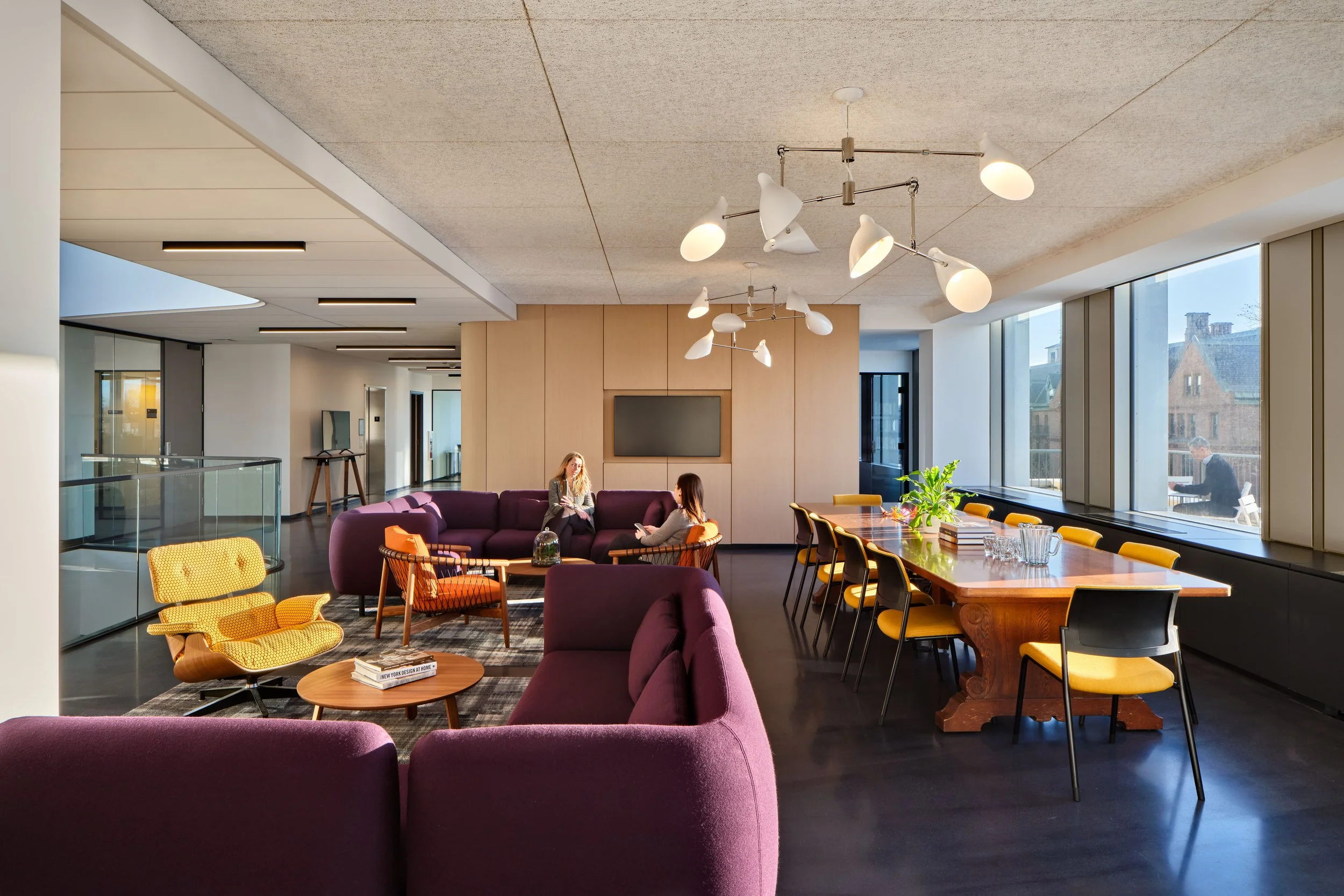
Open Seating
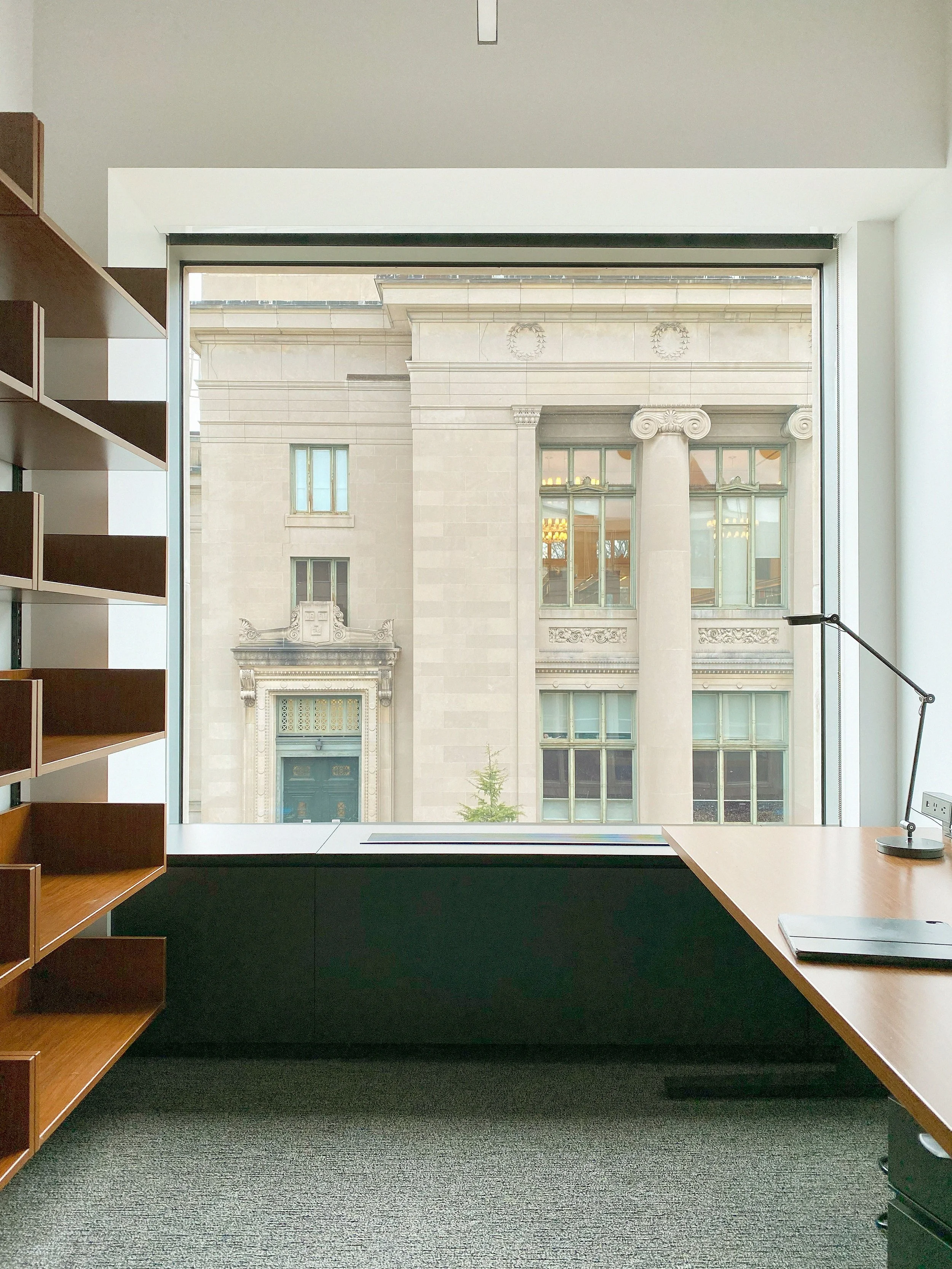
Private Faculty Office
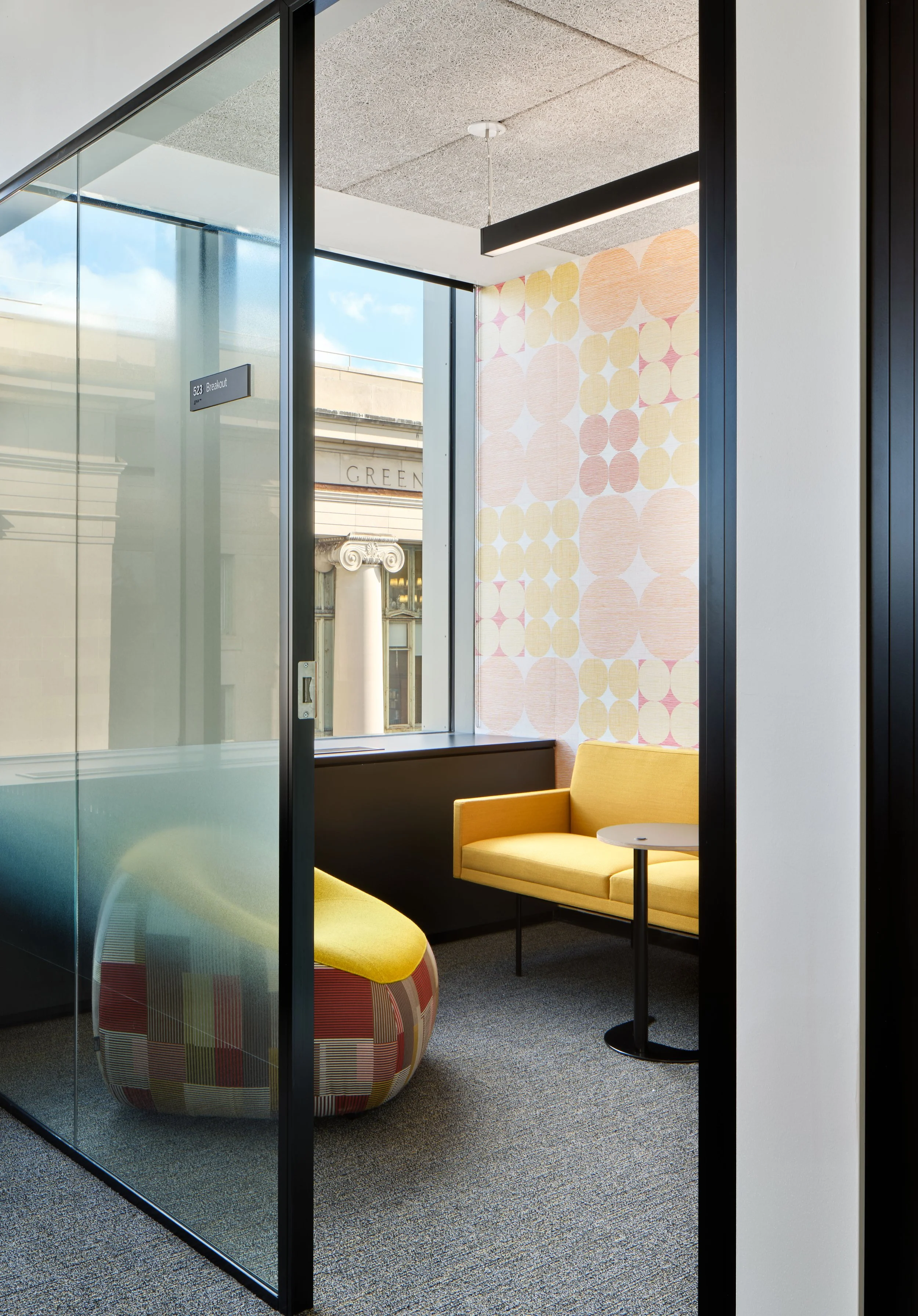
Breakout Room
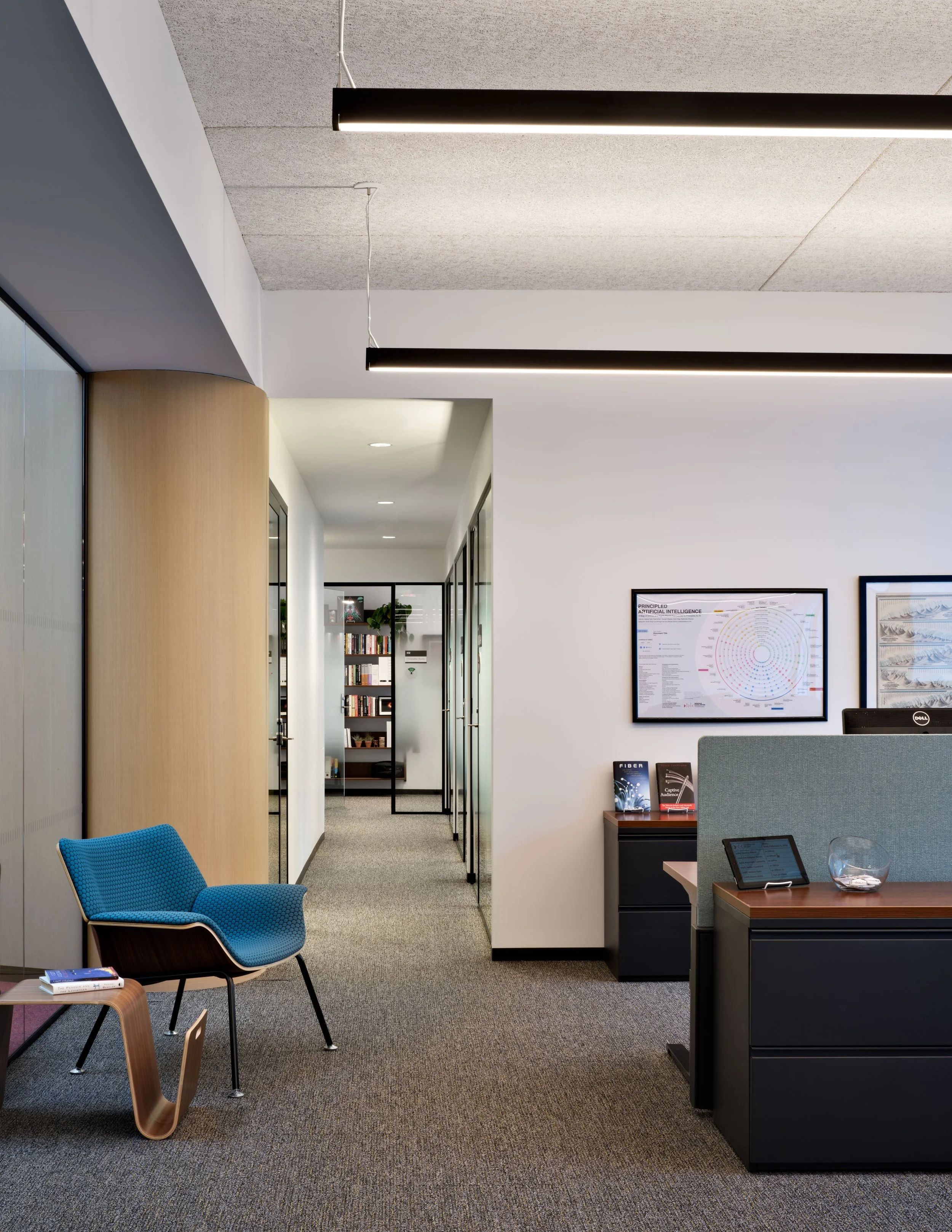
Private Offices